IBC 101 Intro Course
Welcome to the 5-part online course, "Escape the Financial Headwinds - Master the Infinite Banking Concept." This course is designed using a "problem-first" model, specifically engineered to help you identify the hidden costs in your current financial strategy and transform them into powerful wealth-building tools.
| Responsible | Donald Pemberton |
|---|---|
| Last Update | 01/30/2026 |
| Completion Time | 35 minutes |
| Members | 19 |

Welcome to the 5-part online course, "Escape the Financial Headwinds - Master the Infinite Banking Concept." This course is designed using a "problem-first" model, specifically engineered to help you identify the hidden costs in your current financial strategy and transform them into powerful wealth-building tools.
Course Introduction
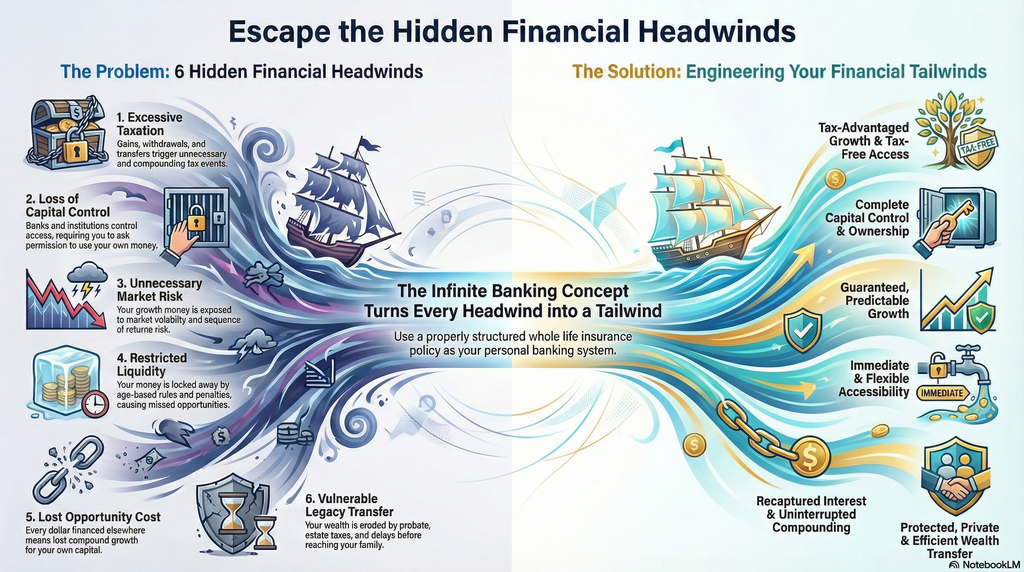
Most conventional financial wisdom silently erodes your wealth through hidden "headwinds" that can cost a typical family over $500,000 throughout their lifetime. This course will challenge the status quo, asking the critical question: What if you could stop following advice that creates financial bondage and instead implement a strategy that turns every financial obstacle into a "tailwind"?. Through these five modules, you will move from identifying the problems of traditional banking to becoming your own banker.
What You Will Learn
By the completion of this course, you will have gained a comprehensive understanding of the Infinite Banking Concept (IBC) and how to apply it to your specific life stage. Specifically, you will learn:
- How to Identify the 6 Major Financial Headwinds: You will learn to recognize the specific forces stealing your wealth, including excessive taxation, loss of capital control, unnecessary market risk, restricted liquidity, lost opportunity cost, and vulnerable legacy transfers.
- The Mechanics of the Banking Revolution: You will go "behind the curtain" to see how traditional banks profit through fractional reserve lending and "the spread". You will learn how to capture both sides of the banking equation—the borrower and the lender—by using whole life insurance as a personal banking system.
- The Four Pillars of Infinite Banking: You will master the core advantages of a properly structured policy, including guaranteed growth, flexible access, significant tax advantages, and the power of uninterrupted compounding (where your money grows even while you are using it).
- Engineering Tailwinds: You will see the "solution architecture" that transforms taxes into tax-advantaged growth and market risk into contractual certainties.
- Real-World Application: You will explore case studies relevant to your age and profession—whether you are a young professional financing an education, a business owner seeking equipment financing, or a retiree looking for tax-free income streams.
- Custom Blueprint Design: Finally, you will learn the technical principles of policy design, such as the 40-40-20 rule (Base, Paid-Up Additions, and Term Riders), to ensure your system is built for maximum cash value efficiency.
Course Outcomes
Upon finishing the modules, you will possess a customized blueprint for your personal banking system, know the exact steps to implement your strategy, and understand how to begin recapturing the interest you currently pay to outside institutions.
To visualize the journey ahead, imagine trying to row a boat against a steady, invisible current. You are working hard, but much of your energy is wasted just staying in place. This course is designed to show you how to turn the boat around and hoist a sail; instead of fighting the current of taxes and interest, you will learn to use those same forces to propel you forward much faster than you could ever row alone.
Intro
View allWelcome to the 5-part online course, "Escape the Financial Headwinds - Master the Infinite Banking Concept." This course is designed using a "problem-first" model, specifically engineered to help you identify the hidden costs in your current financial strategy and transform them into powerful wealth-building tools.
Course Introduction
Most conventional financial wisdom silently erodes your wealth through hidden "headwinds" that can cost a typical family over $500,000 throughout their lifetime. This course will challenge the status quo, asking the critical question: What if you could stop following advice that creates financial bondage and instead implement a strategy that turns every financial obstacle into a "tailwind"?. Through these five modules, you will move from identifying the problems of traditional banking to becoming your own banker.
What You Will Learn
By the completion of this course, you will have gained a comprehensive understanding of the Infinite Banking Concept (IBC) and how to apply it to your specific life stage. Specifically, you will learn:
- How to Identify the 6 Major Financial Headwinds: You will learn to recognize the specific forces stealing your wealth, including excessive taxation, loss of capital control, unnecessary market risk, restricted liquidity, lost opportunity cost, and vulnerable legacy transfers.
- The Mechanics of the Banking Revolution: You will go "behind the curtain" to see how traditional banks profit through fractional reserve lending and "the spread". You will learn how to capture both sides of the banking equation—the borrower and the lender—by using whole life insurance as a personal banking system.
- The Four Pillars of Infinite Banking: You will master the core advantages of a properly structured policy, including guaranteed growth, flexible access, significant tax advantages, and the power of uninterrupted compounding (where your money grows even while you are using it).
- Engineering Tailwinds: You will see the "solution architecture" that transforms taxes into tax-advantaged growth and market risk into contractual certainties.
- Real-World Application: You will explore case studies relevant to your age and profession—whether you are a young professional financing an education, a business owner seeking equipment financing, or a retiree looking for tax-free income streams.
- Custom Blueprint Design: Finally, you will learn the technical principles of policy design, such as the 40-40-20 rule (Base, Paid-Up Additions, and Term Riders), to ensure your system is built for maximum cash value efficiency.
Course Outcomes
Upon finishing the modules, you will possess a customized blueprint for your personal banking system, know the exact steps to implement your strategy, and understand how to begin recapturing the interest you currently pay to outside institutions.
To visualize the journey ahead, imagine trying to row a boat against a steady, invisible current. You are working hard, but much of your energy is wasted just staying in place. This course is designed to show you how to turn the boat around and hoist a sail; instead of fighting the current of taxes and interest, you will learn to use those same forces to propel you forward much faster than you could ever row alone.
Section 1:
View all
Part 1 of the course is titled "The Hidden Financial Headwinds Stealing Your Wealth". This module is designed using a "problem-first" model, focusing on identifying the specific financial forces that silently erode wealth-building potential over a lifetime.
Learning Objectives
By the end of this module, participants should be able to:
- Identify the 6 major financial headwinds costing them money daily.
- Understand the true, long-term cost of traditional financial strategies.
- Recognize how following conventional wisdom can lead to financial bondage.
The 6 Financial Headwinds
The core of Part 1 is an in-depth analysis of six specific problems inherent in traditional banking and investment models:
- Excessive Taxation: Every gain, withdrawal, and transfer in traditional accounts (like 401ks) triggers unnecessary tax events. Over 30 years, the compounding effect of tax erosion significantly diminishes wealth.
- Loss of Capital Control: In the current system, banks control when and how you access your money. Even when using your own money as collateral, you are often subjected to qualification requirements and early withdrawal penalties.
- Unnecessary Market Risk: Traditional retirement accounts expose your savings to market volatility and the "sequence of returns" risk, which can be devastating if a market crash occurs near retirement.
- Restricted Liquidity: Rules such as the 59½ age restriction and penalties for early access lock your money away, preventing you from acting when unique opportunities arise.
- Lost Opportunity Cost: This is the concept that every dollar spent or financed through a third party (like car payments or mortgages) is a dollar that stops compounding for you. In essence, your capital works for everyone except you.
- Vulnerable Legacy Transfer: Traditional wealth transfer often faces probate costs, delays, and estate taxes, meaning the government and attorneys often receive a portion of your wealth before your family does.
The Cumulative Impact
The sources state that these headwinds combined typically cost a family $500,000 or more throughout their lifetime. The module concludes by challenging participants to consider a strategy that could turn these obstacles into "tailwinds".
To visualize these headwinds, imagine you are trying to fly a plane toward "Financial Freedom." Even with a powerful engine, if you are flying into a constant, invisible headwind of taxes and interest, you will burn significantly more fuel and may never reach your destination. Part 1 helps you see that it isn't the plane's engine that is the problem—it is the environment you are flying in.
Section 2:
View all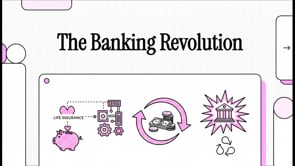
Part 2 of the course, titled "The Banking Revolution: How Money Really Works," shifts focus from identifying external problems to understanding the mechanics of the banking system and how individuals can replicate it for their own benefit,.
The primary goal of this module is to deepen the participant's understanding of how financial institutions profit and how a properly structured whole life insurance policy can function as a personal banking system.
Learning Objectives
By the end of this module, participants should be able to:
- Explain how traditional banks generate profit from depositor money.
- Recognize the opportunity to become their own banker.
- Distinguish between being a mere depositor versus an owner of a financial system.
Banking 101: The Current System
The course exposes the "real game" of traditional banking, highlighting two key mechanisms:
- Fractional Reserve Lending: How banks use a small amount of deposits to lend out much larger sums.
- The Spread: The significant difference between the low interest rates banks pay to depositors and the much higher rates they charge to borrowers.
- The Banking Profit Model: A visual and conceptual demonstration of why banks prioritize keeping your money in checking and savings accounts.
The Introduction of Infinite Banking
The module introduces the Infinite Banking Concept (IBC), pioneered by Nelson Nash in his book "Becoming Your Own Banker". It teaches that you can capture both the borrower and lender sides of the banking equation by using a whole life insurance policy as your own collateral. A key example used is the difference between financing a car through a traditional bank versus financing it through your own policy.
The Four Pillars of Infinite Banking
The core of the IBC solution is built on four specific advantages:
- Guaranteed Growth: Policies offer contractual growth and potential dividends from mutual insurance companies, completely independent of stock market volatility.
- Flexible Access: Policy loans are available immediately without qualification requirements or restrictions on how the funds are used.
- Tax Advantages: Growth is tax-deferred, and when structured correctly, policy loans and the final death benefit are tax-free.
- Uninterrupted Compounding: This is a critical concept where your cash value continues to grow even when you have an outstanding loan against it, effectively allowing you to "pay yourself back" and use the same dollar for multiple purposes,.
Case Study Preview
The module concludes with a practical example: a $50,000 policy loan for a car purchase. This demonstrates how a policyholder can acquire the vehicle while their original cash value continues to compound, illustrating the power of recapturing interest that would otherwise be lost to a bank.
To visualize this shift, imagine a traditional bank as a toll booth on a bridge you must cross; every time you move your money, they take a cut. Part 2 teaches you how to own the bridge yourself. Instead of paying the toll to someone else, you keep the money and use it to maintain and expand your own road.
Section 3:
View all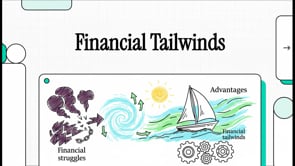
Part 3 of the course is titled "Engineering Your Financial Tailwinds" and focuses on the architecture of the solution to the financial problems identified in earlier sections. The primary goal is to teach participants how a properly structured whole life insurance policy transforms traditional financial "headwinds" into "tailwinds".
Learning Objectives
By the end of this module, participants should:
- Understand the mechanics of properly structured whole life insurance.
- See how specific financial headwinds are converted into tailwinds.
- Learn the components required for an optimal policy design.
Converting Headwinds to Tailwinds
This section of the course demonstrates how the Infinite Banking Concept (IBC) reverses the negative impacts of traditional finance:
- Taxation → Tax-Advantaged Growth: Instead of losing 25–40% of growth to taxes, IBC allows for tax-deferred accumulation, tax-free access via loans, and a tax-free death benefit.
- Loss of Control → Complete Capital Control: The policyholder owns the policy and controls access without needing bank approval or meeting rigid repayment terms, allowing for instant access to capital.
- Market Risk → Guaranteed Growth: IBC provides contractual minimum growth rates and potential dividends that are not correlated with stock market volatility, ensuring steady wealth accumulation.
- Restricted Liquidity → Immediate Accessibility: Unlike retirement accounts with age-based restrictions (like the 59½ rule) or penalties, funds are available when the policyholder needs them, often starting in year one.
- Lost Opportunity Cost → Recaptured Interest: By financing their own purchases and paying themselves back, individuals capture the profit typically taken by banks and allow their original capital to continue compounding.
- Legacy Vulnerability → Protected Wealth Transfer: Wealth is transferred efficiently because the death benefit bypasses probate, is generally tax-free to heirs, and enjoys creditor protection in most states.
The Infinite Banking Policy Structure
The course explains that an IBC policy is engineered using specific components to maximize cash value rather than just providing a death benefit:
- Base Policy: Provides the foundational insurance and cash value.
- Paid-Up Additions (PUAs): Used to accelerate cash value growth.
- Term Riders: Provide additional coverage during the wealth-building years.
- Optimal Funding: Strategies tailored to different income levels to ensure the policy remains efficient.
Real-World Application
Part 3 concludes with a detailed walkthrough of how these policies are used in practice to finance business investments, pay for education, supplement retirement income, and leave a protected legacy.
To understand this transformation, imagine a cyclist struggling against a heavy wind (the headwinds of taxes and interest). Engineering a "tailwind" is like turning that cyclist around and giving them a motorized assist; suddenly, the same effort results in much greater speed and distance because the environment is now pushing them forward instead of holding them back.
Section 4:
View all
Part 4 of the course is titled "Your Personal Banking System in Action" and moves from the theoretical architecture of the system to practical implementation and strategy. This module is designed to show how the Infinite Banking Concept (IBC) applies to real-life situations across different demographics and financial needs.
Learning Objectives
By the end of this module, participants will:
- Examine detailed examples of infinite banking applications.
- Understand specific implementation strategies for various life stages.
- Learn how to integrate IBC with their existing financial plans.
Implementation by Life Stage
The sources detail how the system adapts to an individual's current age and financial goals:
- Young Professionals (Ages 25–35): Focuses on starting smaller policies that grow over time, using policy loans for major purchases (homes, cars, or business starts), and building a foundation for lifetime wealth. A case study includes using a policy to finance graduate school.
- Peak Earners (Ages 35–55): Emphasizes maximum funding strategies and repositioning existing assets into policies. This stage often involves using the system for business financing and real estate investing.
- Pre-Retirees (Ages 55–65): Focuses on creating tax-free retirement income streams and protecting accumulated wealth from market volatility.
- Retirees (Ages 65+): Prioritizes converting existing assets into tax-free income, estate planning, and wealth transfer.
Strategies for Special Situations
Part 4 also addresses how specific groups can leverage the system:
- Business Owners: Can use policies for key person insurance, equipment financing through policy loans, and business succession planning.
- High-Income Earners: Provides a way to work around 401k and IRA contribution limits and focuses on multi-generational wealth strategies.
- First Responders: Can be used to supplement government pensions and plan for early retirement or disability income.
Integration and Common Scenarios
The course explains that infinite banking is not meant to replace all other investments but to integrate with them. It suggests gradual transition strategies and working alongside current financial advisors. Common real-world scenarios highlighted in this section include:
- The Zero-Interest Car Purchase: Recapturing interest on vehicle financing.
- The Self-Financed Home Down Payment: Using policy cash value for real estate entry.
- The Tax-Free College Fund: An alternative to restricted education savings plans.
- The Market Crash Opportunity Fund: Maintaining liquid capital to buy assets when the market drops.
To understand how this works in practice, think of the personal banking system as a financial Swiss Army knife. While the tool itself stays the same, you switch between different blades—the "car-buying blade," the "retirement-income blade," or the "business-expansion blade"—depending on which task you need to complete at that specific stage of your life.
Section 5:
View all
Part 5 of the course is titled "Designing Your Financial Freedom Blueprint." This final module shifts from general education to the practical customization and implementation of your personal banking system. The goal is to move beyond theory and provide you with a personalized strategy tailored to your specific financial situation.
Learning Objectives
By the end of this module, participants will be able to:
- Create a personalized infinite banking strategy.
- Understand the technical policy design principles relevant to their unique situation.
- Identify the exact steps required to implement and manage their personal banking system.
The Customization Process
The design of your blueprint begins with a Personal Assessment Framework to evaluate your current income, cash flow, assets, and tax liabilities. This is followed by a Goal Setting Exercise where you define specific objectives for the short term (1–5 years), medium term (5–15 years), and long term (15+ years).
Policy Design Principles
A critical part of this module is learning how a policy is engineered for maximum efficiency. The sources highlight the 40-40-20 Rule as a foundational design principle:
- 40% Base Policy: Provides the insurance foundation.
- 40% Paid-Up Additions (PUAs): Accelerates cash value growth.
- 20% Term Rider: Offers additional coverage during the wealth-building years.
Participants also learn about Funding Strategies, ranging from minimum funding for steady growth to maximum funding within "Modified Endowment Contract" (MEC) limits to optimize cash accumulation.
Company Selection and Implementation
Not all insurance companies are suitable for Infinite Banking. The course outlines specific Company Selection Criteria, emphasizing the importance of mutual companies (rather than stock companies), strong dividend histories, and favorable policy loan terms.
The implementation follows a structured Timeline:
- Years 1–2: Foundation building and initial funding.
- Years 3–7: The acceleration phase and first strategic uses of policy loans.
- Years 8+: The system reaches full operation.
Avoiding Common Pitfalls
To ensure long-term success, Part 5 addresses common mistakes, such as under-funding the policy initially, failing to use the system once established, and working with non-specialized advisors who do not understand IBC principles.
Next Steps Action Plan
The course concludes with a clear path forward, which includes completing a financial assessment, scheduling a personal consultation, and beginning the application process to establish a funding schedule. Participants are encouraged to develop the mindset of "paying yourself first" and recapturing interest to achieve long-term financial independence.
To understand the value of this blueprint, imagine you are building a custom home. Parts 1 through 4 helped you understand why you need a house and what materials exist. Part 5 is the architectural drawing—it takes your specific needs (the size of your family, your budget, and your location) and creates a precise map so that every brick laid serves a specific purpose for your future.